
The choice of façade channel
Every drainage project is unique. With the right planning and choice of product, every flat roof and façade drainage project will be a success.
There are various technical and constructional specifics in the drainage of façades. For example, the drainage system should have a construction width of more than 15 cm, unless the splash water exposure is minimised by a roof. Low installation heights and the correct installation often place high demands on the product to be selected. In addition, the façade channel should be corrosion-resistant, as it is frequently exposed to cleaning solutions.
Challenges in façade drainage
Sealing of substructure areas
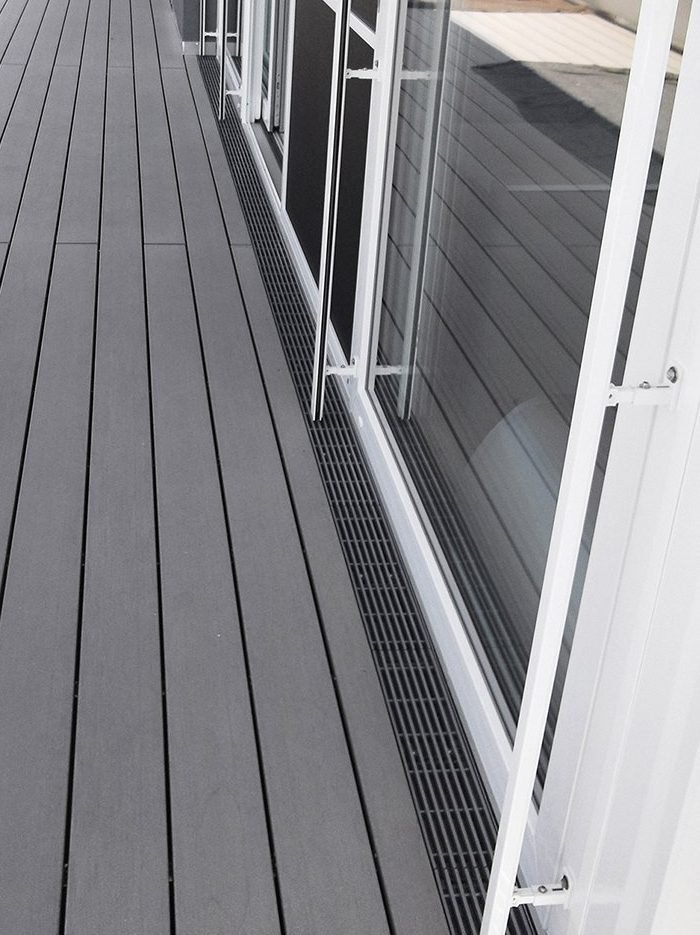
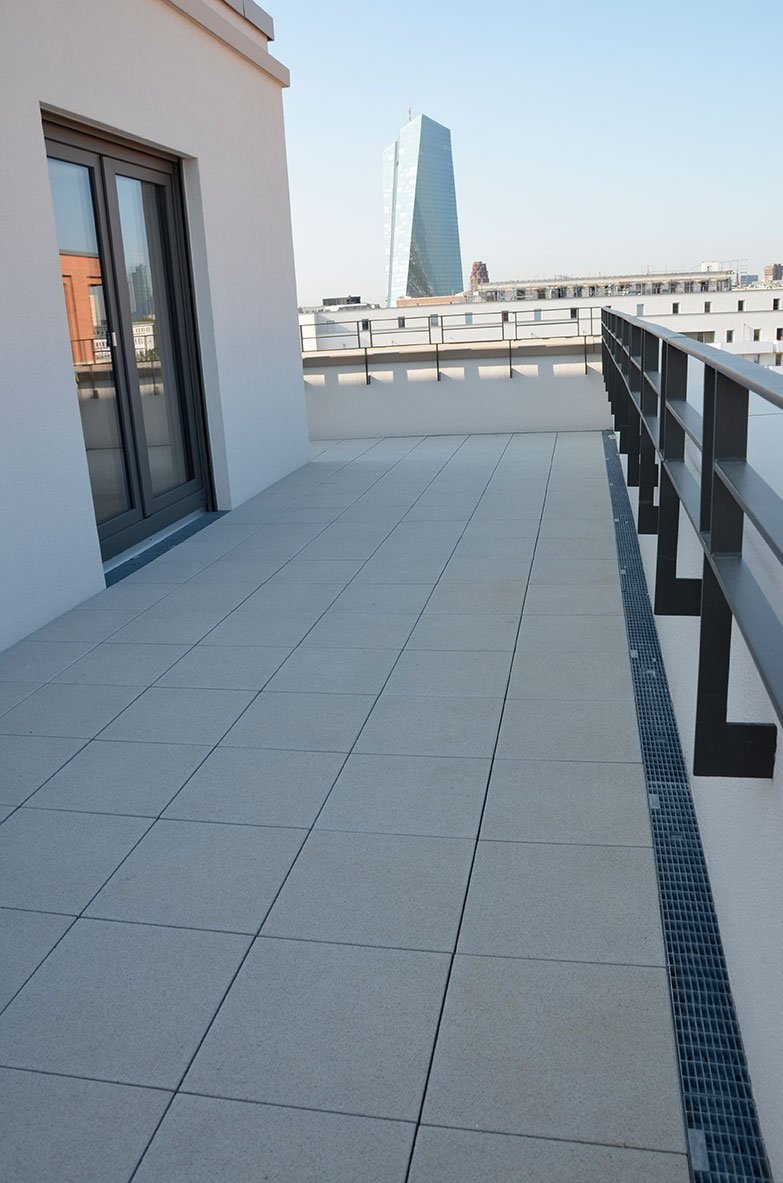
The connection height of the sealing to rising structural components should be at least 15 cm above the surface covering or gravel fill. This is to prevent precipitation water from penetrating through the door or window areas in the event of driving rain, slush formation, wind pressure, icing or water accumulation due to blocked drains.
A reduction of the connection height to 5 cm is possible if proper water drainage is ensured at all times and the splash water exposure is minimised. In case of a reduction to below 5 cm and up to 2 cm, a drainage channel or a comparable construction with direct connection to the drainage must be used in the immediate door or window area.
Sealing of non-substructure areas
Here, too, the sealing should be placed at least 15 cm above the ground surface (access) to prevent rainwater from entering the building or running down behind the sealing. For lower connection heights below 15 cm, direct water drainage in the door area must be ensured and the splash water exposure minimised.
“When it comes to the drainage of façades, balconies and flat roofs, there are standards and guidelines to consider in addition to technical and constructional peculiarities. I would be happy to support you with my many years of experience in the field of façade drainage with all the requirements in your construction project.”
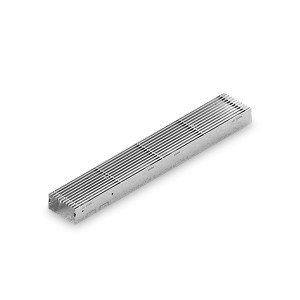
The closed box channel for standardised and compliant façade drainage.
|

Façade channel for deep-set glass façades
|
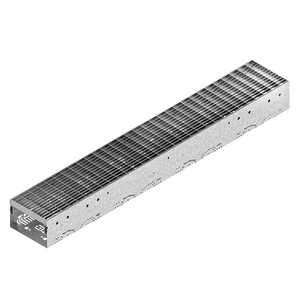
Standard and regulation-compliant drainage of façades, flat roofs, balconies and roof terraces
|
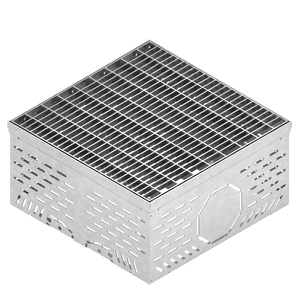
Ideal solution for point drainage of flat roofs, balconies and roof terraces
|
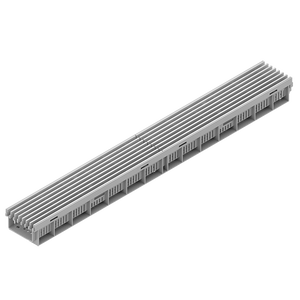
Lightweight recycled composite channel for drainage of façades, flat roofs, balconies and roof terraces
|
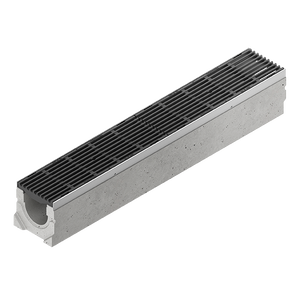
Durable drainage system for draining façades
|
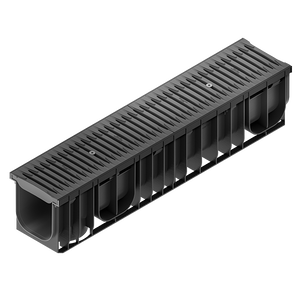
Corrosion-free drainage system for draining façades
|
|---|
| Attribute | STEELFIX REGULAR | STEELFIX FLEX | DACHFIX STEEL | DACHFIX POINT | DACHFIX RESIST | FASERFIX KS | RECYFIX PRO |
|---|---|---|---|---|---|---|---|
| Load class according to EN 1433 | Load class according to EN 1433: A 15 | Load class according to EN 1433: – | Load class according to EN 1433: A 15 | Load class according to EN 1433: A 15 | Load class according to EN 1433: A 15 | Load class according to EN 1433: Up to F 900 | Load class according to EN 1433: Up to C 250 |
| Load frequency | Load frequency: 3 out of 6 | Load frequency: 2 out of 6 | |||||
| Load dynamics | Load dynamics: 3 out of 6 | Load dynamics: 2 out of 6 | |||||
| Nominal width | System size | Nominal width | System size: 115, 135, 155, 205, 255 | Nominal width | System size: Customised | Nominal width | System size: 115, 135, 155, 205, 255 | Nominal width | System size: 30/30 & 40/40 | Nominal width | System size: 115 | Nominal width | System size: 100, 150, 200, 300 | Nominal width | System size: 100, 150, 200, 300 |
| Materials of the lower parts | Materials of the lower parts: Galvanised or stainless steel | Materials of the lower parts: Stainless steel, galvanised steel, corten steel | Materials of the lower parts: Galvanised or stainless steel | Materials of the lower parts: Galvanised or stainless steel | Materials of the lower parts: Recycled composite | Materials of the lower parts: Fibre-reinforced concrete | Materials of the lower parts: Polypropylene (PP), approx 93 % recycled composite* |
| Angle housing |
Angle housing: – |
Angle housing: – |
Angle housing: – |
Angle housing: –
|
Angle housing: – |
Angle housing: Galvanised steel or stainless steel angle housing with 20 x 20 mm insertion depth |
Angle housing: Recycled composite angle housing with 20 x 20 mm insertion depth |
| Grating variants |
Grating variants: – FIBRETEC design gratings |
Grating variants: A wide range of gratings with customised bar spacings and surfaces are possible,
⇒ Made of galvanised steel, stainless steel |
Grating variants: – Slotted grating |
Grating variants: – Longitudinal grating |
Grating variants: – Slotted grating |
Grating variants: – Reinforced slotted gratings |
Grating variants: – GUGI gratings made of PA-GF |
| Suitable for accessible entry points | Suitable for accessible entry points: |
Suitable for accessible entry points: – |
Suitable for accessible entry points: Yes |
Suitable for accessible entry points: Yes |
Suitable for accessible entry points: Yes |
Suitable for accessible entry points: Yes |
Suitable for accessible entry points: Yes |
| Gradient |
Gradient: – |
Gradient: – |
Gradient: | Gradient: | Gradient: | Gradient: | Gradient: |
| Special characteristics |
Special characteristics: – Channels in closed design |
Special characteristics:
|
Special characteristics: – Design in accordance with standards & guidelines |
Special characteristics: – Height adjustment achieved through modular design |
Special characteristics: – Corrosion-free variant |
Special characteristics: – Boltless quick lock SIDE-LOCK |
Special characteristics: – Pre-assembled ready for installation – channel and grating = one component |
* Certified with the German eco-label ‘Blue Angel’
References for façades and flat roofs


Custom solutions for special requirements
As an expert for comprehensive rainwater management we also offer you the right solution for special façade drainage requirements such as ventilated façades (base channels), radial channels or removable side walls.
Contact us here