Skip to content

Safely planning point drainage

Point drainage systematically diverts rainwater away from paved surfaces. It is particularly suitable for clearly defined outdoor areas where water flow can be planned. Here you can find out when a point drain is appropriate, what planning requirements apply, and when linear drainage is the better choice.

What is point drainage?

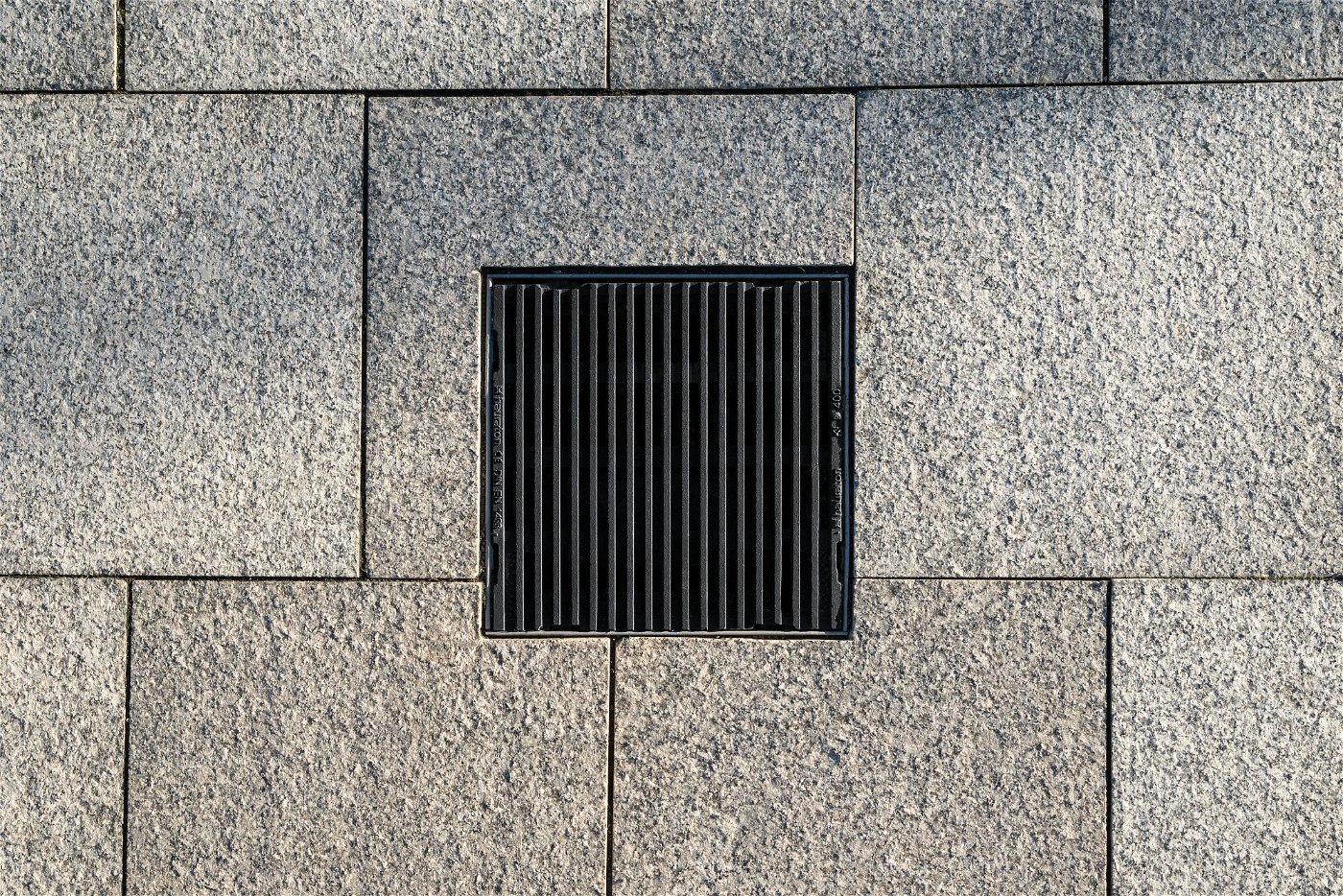
In point drainage, rainwater is collected via a yard drain, yard inlet box, point drain or point inlet and channelled into the connected underground drainage pipe. To achieve this, the surface is designed in such a way that the water flows directly to the drain.

Consequently, the layout of the area plays a key role: the gradient, surface finish and position of the outlet must be coordinated so that rainwater drains away reliably.

Where is point drainage used?

Point drainage is suitable for paved areas in residential, commercial and municipal construction. Typical applications include courtyards, garage driveways, terraces, squares and paths. Point drains are also used on multi-storey car parks or underground car parks, provided there is a natural gradient or one can be created.

Advantages of point drainage:

  • Targeted water intake at a defined low point

  • Discreet integration into paving, concrete or slab surfaces

  • Versatile for use on paved outdoor surfaces

  • Suitable for areas subject to vehicle traffic, depending on the product

Information on the planning of point drainage

A drainage system that remains functional in the long term requires all hydraulic and structural parameters to work together.

This is what matters when it comes to planning:

Ensuring a safe gradient

The water must flow evenly towards the drain. In practice, a gradient of around 2 per cent has become established as the standard in the industry.

Choosing the right catchment area

The larger the area, the more rainwater a single point drain must collect. Catchment areas that are too large can lead to puddles, high water loads and disruptive differences in level.

Take account of surface tolerances

On paved, concrete or slab surfaces, minor irregularities can affect water drainage. For this reason, tolerances should be taken into account when planning the gradient.

Select the load class

A vehicle-accessible point drain must be suitable for its intended use. The key factors are traffic load, vehicle movements and the appropriate design of the drain body and cover.

Keep maintenance accessible

Leaves, sand and dirt can accumulate in the drain. Easily accessible components and dirt-collection buckets make cleaning and inspection easier.

Point drainage vs. linear drainage

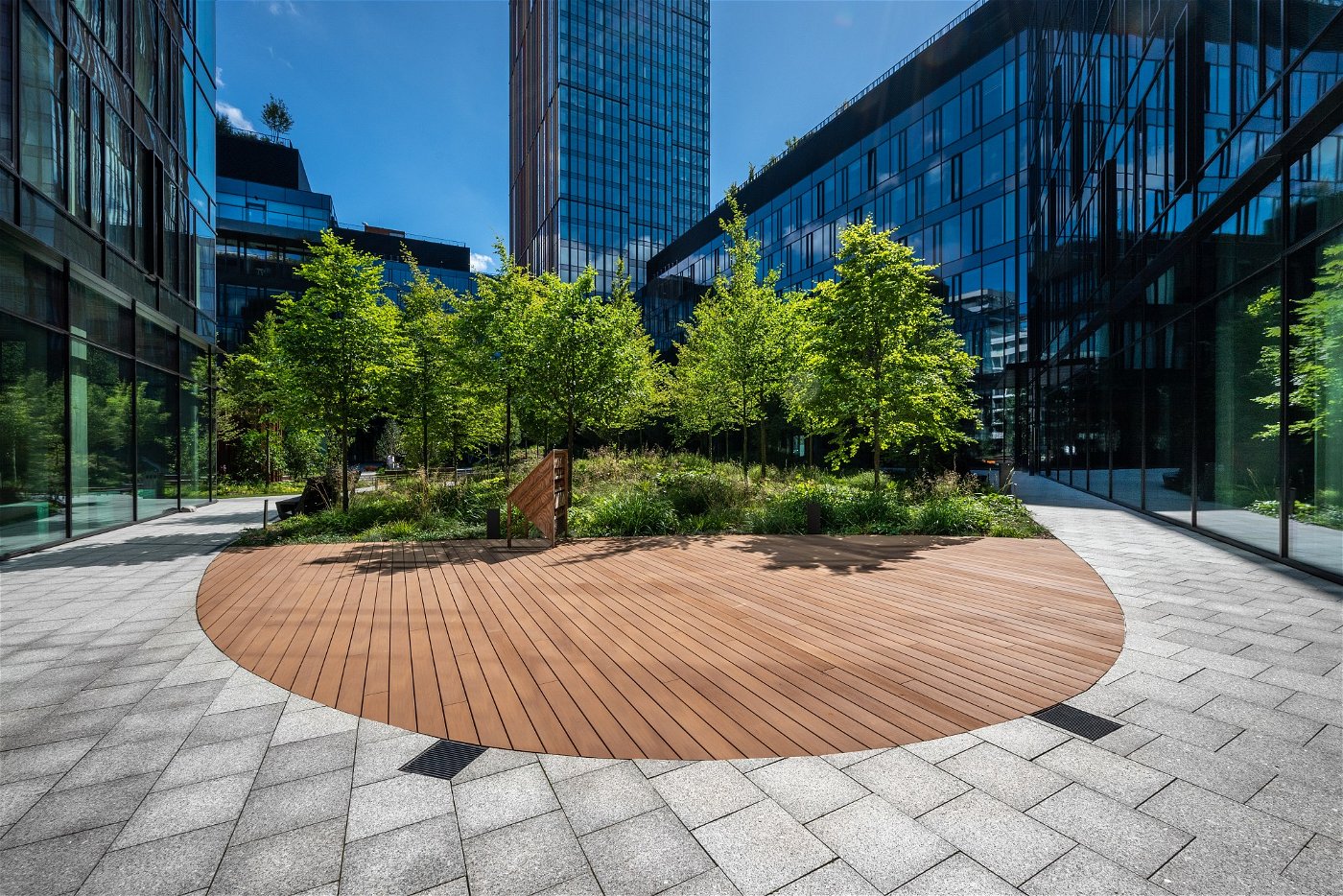
Öffentlicher Platz mit Punkeinlauf

Point drainage

Drains water at a specific point at the lowest level. Ideal for smaller, clearly defined areas with a funnel-shaped gradient.

Linear drainage from HAURATON in front of the entrance to the underground car park – functional and design-oriented.

Linear drainage

Collects rainwater across the entire length of the gutter runs. Ideal for large catchment areas, long drainage runs, steep slopes or barriers in front of façades and driveways.


HAURATON solutions for point drainage

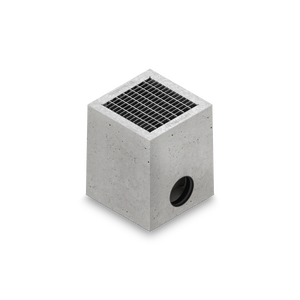
FASERFIX POINT KS

FASERFIX POINT KS Point Drainage

This point inlet is made of fibre-reinforced concrete and is extremely sturdy. It is designed to withstand loads up to Class E 600.

  • High strength thanks to fibre-reinforced concrete with basalt fibres

  • Single- or multi-part designs for flexible applications beyond simple drainage, such as monitoring the ceilings of underground car parks

  • An extremely strong connection between the steel frame and the concrete structure

  • Quick installation of the cover using the SIDE-LOCK quick-release fastening system

Find out more about FASERFIX POINT KS

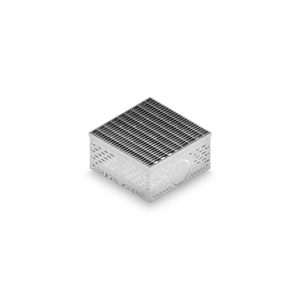
RECYFIX POINT

RECYFIX POINT takes drainage to the next level: rainwater is collected at the lowest point of the catchment area and drained away quickly and reliably. With a load-bearing capacity up to Class C 250, the RECYFIX POINT is stable and suitable for vehicle traffic, making it particularly well-suited for use as a courtyard drain and in public spaces.

  • Sturdy and virtually unbreakable RECYFIX material

  • Lightweight for easy transport and installation

  • Various connection options for all standard main pipes

  • High-quality covers in a star design, as well as in grid and longitudinal bar grating styles, made from cast iron and steel

Find out more about RECYFIX POINT

Further HAURATON solutions:

Product comparison table
Attribute FASERFIX POINT STANDARD DACHFIX POINT
Load class according to EN 1433 Load class according to EN 1433: A 15 Load class according to EN 1433: A 15
Load frequency Load frequency: 1 out of 6
Load dynamics Load dynamics: 1 out of 6
Nominal width | System size Nominal width | System size: 30/30, 40/40 Nominal width | System size: 30/30, 40/40
Materials of the lower parts Materials of the lower parts: Fibre-reinforced concrete Materials of the lower parts: Stainless steel 1.4301 or hot-dip galvanised steel
Angle housing Angle housing:

Angle housing:
  • Galvanised steel or
  • stainless steel
Grating variants Grating variants:
  • Grating
Grating variants:
  • Longitudinal bar grating
  • Grating

⇒ Made from galvanised steel or stainless steel

Special characteristics Special characteristics:
  • Can be fitted without a cover
  • Includes odour trap and aluminium waste bin
Special characteristics:
  • Height adjustment thanks to modular design
  • Connection options for a sump and pipe connection

Frequently asked questions about point drainage:

  • Point drainage channels rainwater away via a single outlet. The water flows down the slope to the point outlet and from there into the underground drainage pipe.

  • A courtyard drain is suitable for courtyards, driveways, garage areas and small open spaces, provided the water can be safely channelled to a low point.

  • Point drainage uses a single outlet within the area. Line drainage uses a channel and is often used when water needs to be collected over a longer distance or along an edge.

  • There is no standardised minimum gradient laid down by regulations. In practice, a gradient of around 2 per cent has become established as the optimal recommendation.

  • Yes – provided the product, cover, load class and installation are suitable for the intended use.

    Find out more about load classes.

Questions?

Our experienced planning team will be happy to help you.

Get in touch
Questions?