Skip to content

Coalescence treatment efficiency

Treatment of rainwater from petroleum substances using the coalescence process is considered to be one of the most effective. The water discharged from the separator must meet the parameters suitable for wastewater discharged into waters or the ground and the parameters to be met by wastewater discharged into municipal sewerage systems. The maximum permissible value for oil-derived substances in wastewater discharged into waters or the ground and combined sewers is 15 mg/l. Pretreatment parameters for HAURATON separators:

  • Class I separators according to EN 858
  • Maximum permissible residual oil content 5 mg/l
  • Purification efficiency of up to 99.88%

Comparison of separators

Catchment area, load class, available space for installation or separator capacity are all aspects that need to be taken into account when selecting a suitable treatment device. The following comparison shows the main differences between petroleum separators. Check which separator has the right parameters for your project.

Product comparison table
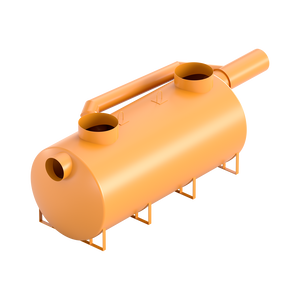
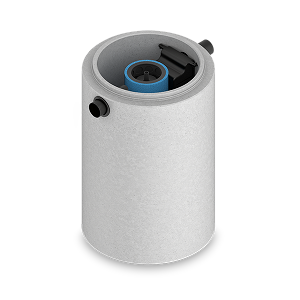
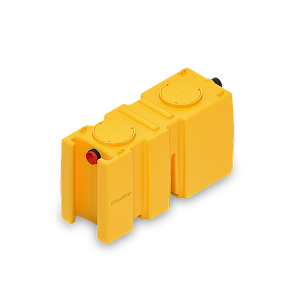
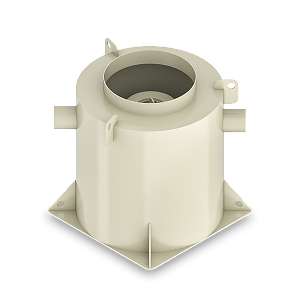
Attribute Steel separators – series G Concrete separators – series P Concrete separators – series H Plastic separators – series P Plastic separators – series H
Nominal size Nominal size:

15 – 250

Nominal size:

3 – 120

Nominal size:

4 – 50

Nominal size:

1,5 – 15

Nominal size:

4-50

Maximum flow performance Maximum flow performance:

75 – 2500

Maximum flow performance:

100 – 1200

Maximum flow performance:

100 – 200

Maximum flow performance:

30 – 50

Maximum flow performance:

30 – 300

ByPass ByPass:

5 x by-pass; 10 x by-pass

ByPass:

10 x by-pass

ByPass:

5 x Bypass; 10 x Bypass

ByPass:

5 x by-pass

ByPass:

5 x Bypass; 10 x Bypass

DN in-/outlet DN in-/outlet:

DN110, DN160, DN200, DN315, DN400, DN500, DN630, DN800, DN1000

DN in-/outlet:

DN110, DN160, DN200, DN315, DN400, DN500, DN630, DN800, DN1000

DN in-/outlet:

DN110, DN160, DN200, DN250, DN315, DN400, DN500

DN in-/outlet:

DN110, DN160, DN200, DN315

DN in-/outlet:

DN110, DN160, DN200, DN315, DN400, DN500

Application area Application area:
  • Road infrastructure
  • Airports
  • Factories, production halls and warehouses
Application area:
  • Road infrastructure
  • Factories, production halls and warehouses
  • Public spaces
Application area:
  • Road infrastructure
  • Factories, production halls and warehouses
  • Public spaces
Application area:
  • Residential and commercial buildings
  • Underground garages
Application area:
  • Residential and commercial buildings
  • Industrial sites
  • Underground garages

How do coalescence separators work?

The principle of the separators is based on the combined action of gravity and the coalescence phenomenon. As they pass through the coalescing media, oil and petrol particles stick to it. As more droplets accumulate, they aggregate into larger agglomerates, break away from the filter cartridge and float to the surface of the tank, where they remain until they are removed during periodic cleaning. The use of a coalescing cartridge significantly increases the effectiveness of rainwater treatment.

Application areas of AQUAFIX hydrocarbon separators

Hydrocarbon separators separate water and light mineral liquids, so they are most commonly used at petrol stations, car washes, car showrooms and workshops, car parks, parking areas, distribution centres, fuel storage areas, car scrap yards, transformer stations, oil processing plants, refineries, machinery manufacturing plants, ports, marinas, water treatment facilities, etc.

Questions?

Our experienced planning team will be happy to help you.

Get in touch
Questions?