Skip to content
Airport drainage

Rainwater Management for Airports

Rainwater management systems for heavy-duty areas at airports must meet the most stringent requirements in terms of materials and foundations, installation, stability and – above all – safety. On airside areas in particular, the systems used are subjected to extraordinary static and dynamic loads. In addition to reliably draining large volumes of rainfall, they must withstand the highest loads over the long term and meet strict safety and approval requirements. Generally, a distinction is made between airside and landside areas at an airport. What is the reasoning behind this distinction? What does this mean for rainwater management in the two areas? You will find answers to these questions below.

Distinguishing between airport areas

The distinction between airside and landside has a significant impact on the nature, capacity and function of the systems used.

Whilst high hydraulic performance, load-bearing capacity and the management of potentially contaminated surface water are crucial on the airside, the focus on the landside is increasingly on sustainable rainwater management concepts, in addition to safety and comfort.

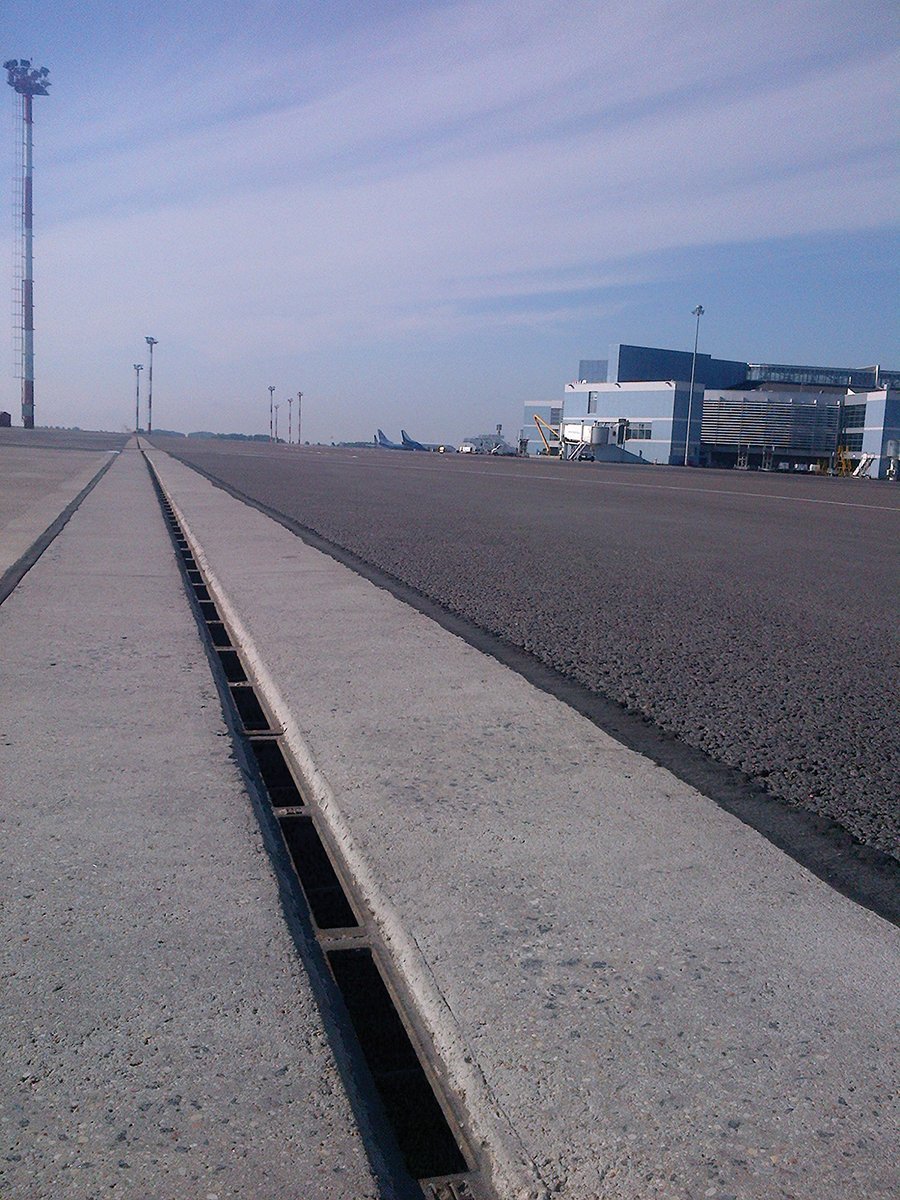
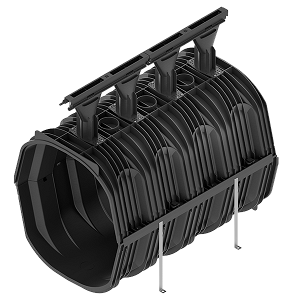
RECYFIX HICAP at International Airport, Vilnius
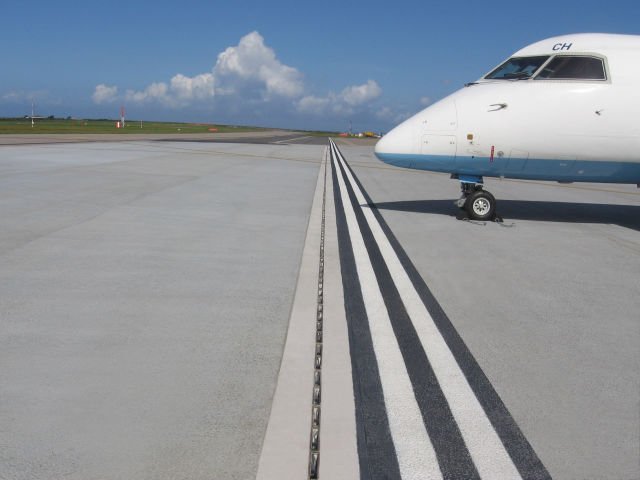
RECYFIX HICAP at Newquay Airport

Rainwater management on the airside

FASERFIX SUPER installed at Polish airport

Airside refers to where the planes operate. It can include the following areas:

  • Apron: aircraft are parked for loading, unloading and refuelling

  • De-icing pads: dedicated areas where aircraft are de-iced before take-off to ensure safe operations during winter weather

  • Taxiways: a pathway for aircraft that connects runways with aprons, terminals, hangars and other airside facilities

  • Runway: for taking off and landing

  • Hangars: to hold aircraft for repairs or maintenance

  • Warehouses & logistics facilities: storage and distribution of air freight goods

Requirements for rainwater management on the airside

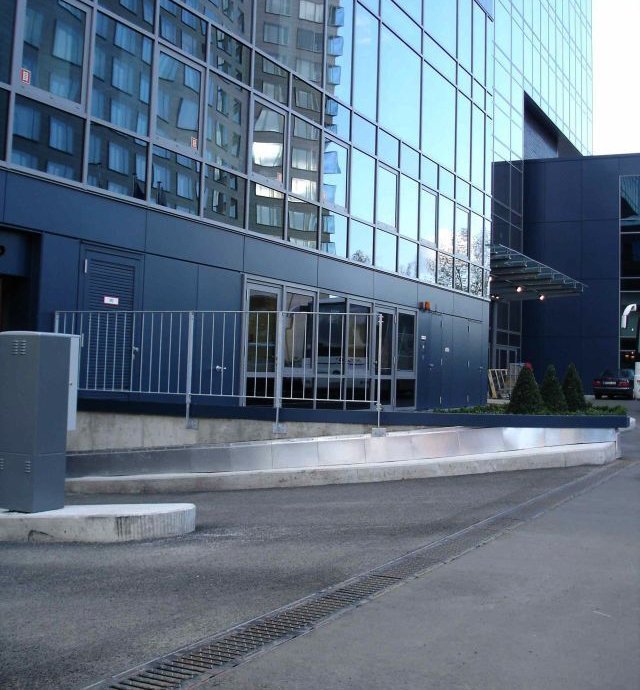
Airport drainage channel for landside

Aircraft and other support vehicles continuously traffic airside surfaces. Extreme loads, frequent use and dynamic forces generated during landing, turning and braking place extreme demands on both the pavement and the rainwater management systems. In addition, the systems must remain watertight and resistant to aviation fuels, de-icing agents and other operating fluids.

Airside rainwater management systems should meet the following requirements:

High hydraulic capacity and reliable performance during heavy rainfall events
Proven load-bearing capacity and serviceability for ultra heavy-duty applications
Watertight system design
Resistance to aviation fuels, de-icing agents and other operating fluids
Safe, durable and secure system design
Easy access for cleaning and efficient maintenance
Reliable performance in both summer and winter operating condition

Rainwater management on the landside

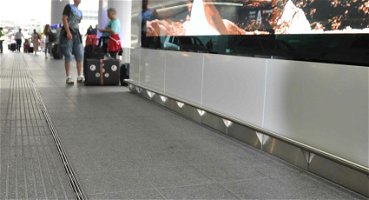
Bespoke channels for Frankfurt Airport Terminal

Landside areas are open to public access, therefore landside drainage systems are important in the following locations:

  • Terminals: passengers transfer on and off aircraft

  • Access roads: routes and interchanges within the airport boundary linking arrival / departure terminals and other landside facilities

  • Communal spaces: external areas for public use

  • Parking areas: cars, buses, coaches, taxis and other public transportation

  • Distribution centres: supply of goods to national and international markets

  • Hotels & commercial complexes: businesses and trade zones within the airport perimeter


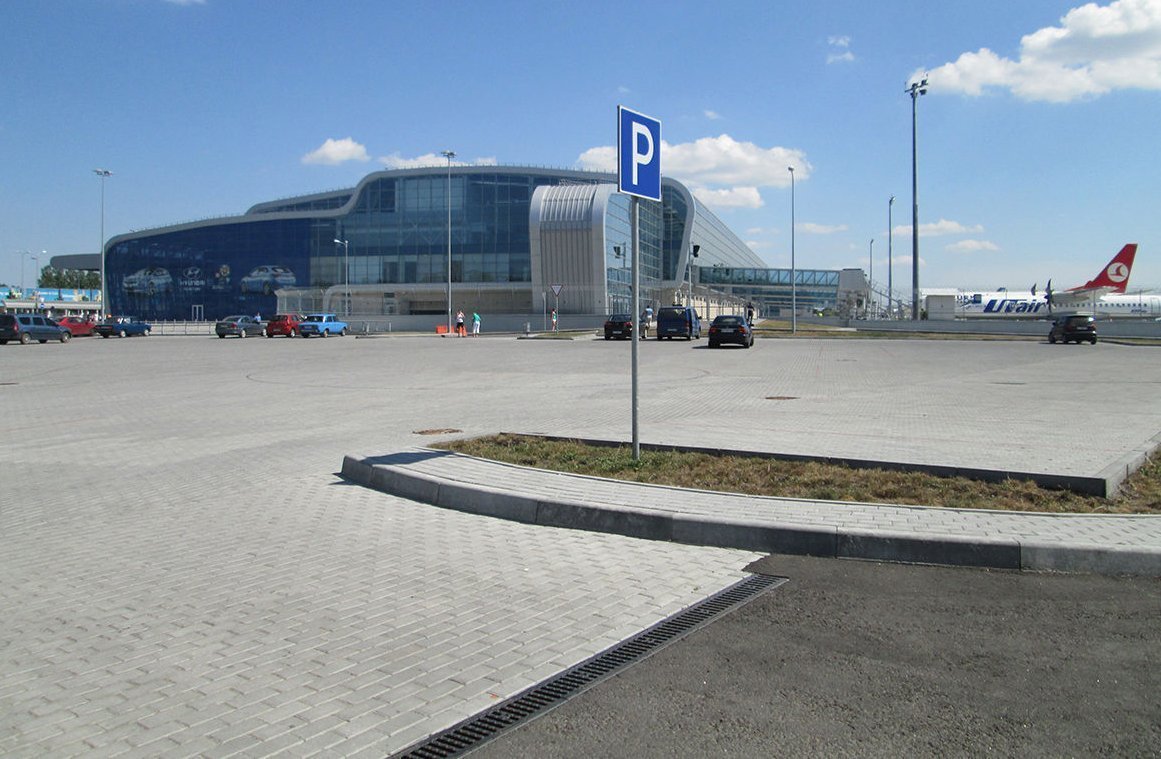
RECYFIX NC at Lviv, Ukraina Airport
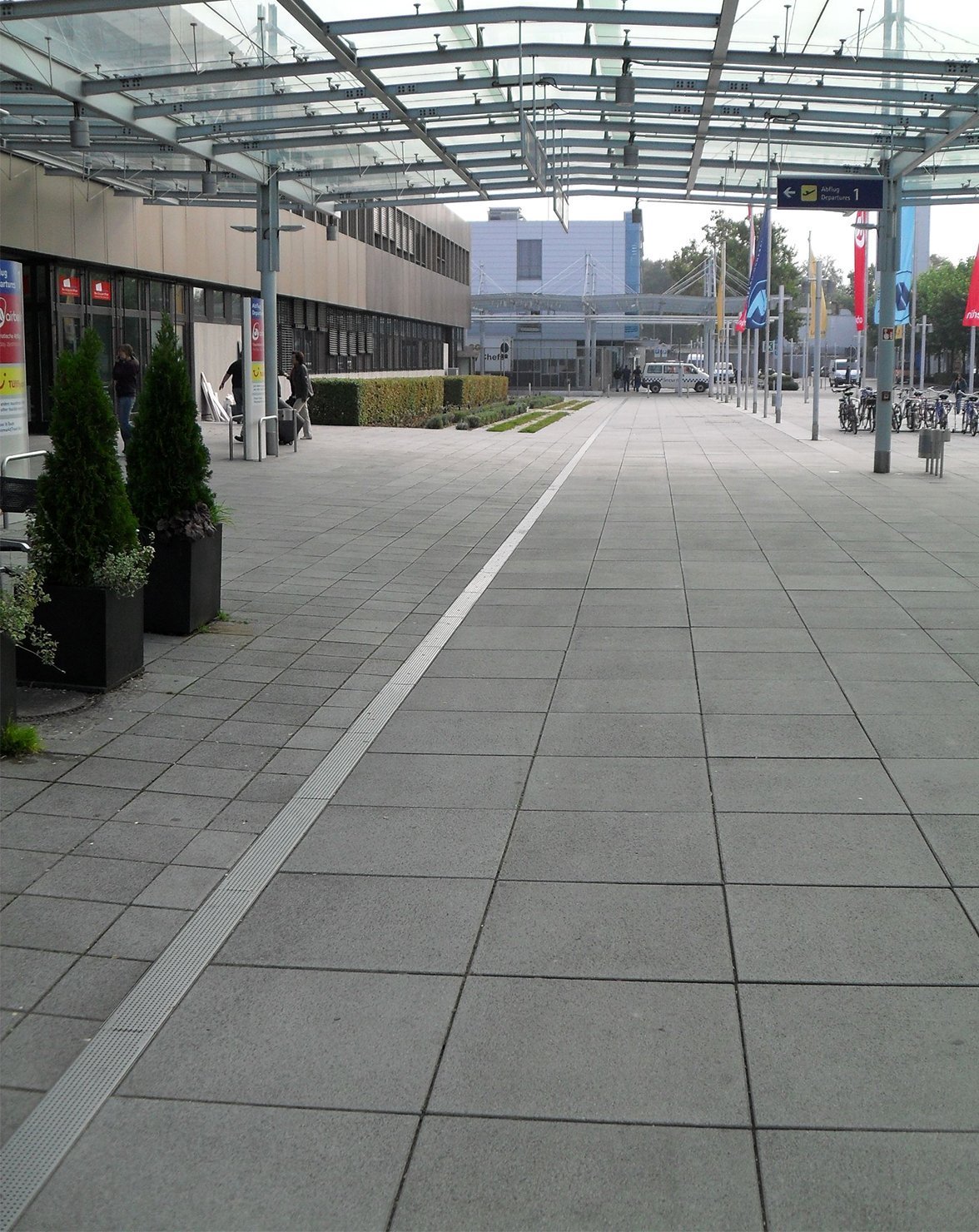
FASERFIX SUPER installed at Nuremberg airport terminal

Requirements for rainwater management at terminals

Newly built terminals in particular are characterised by their striking architecture. Furthermore, airports serve as hubs for many travellers, presenting a number of challenges in dealing with surface water:

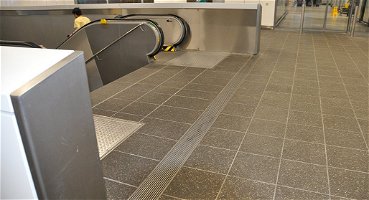
Drainage channel inside airport terminal
Safety & security

Rainwater management in passenger areas should support safe movement of travellers and airport personnel while integrating seamlessly into the surrounding environment.

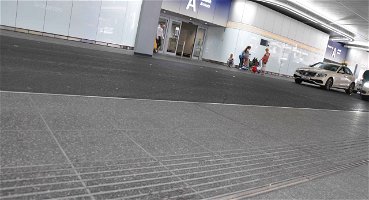
Drainage channel entrance area Fraport
High-quality aesthetic design

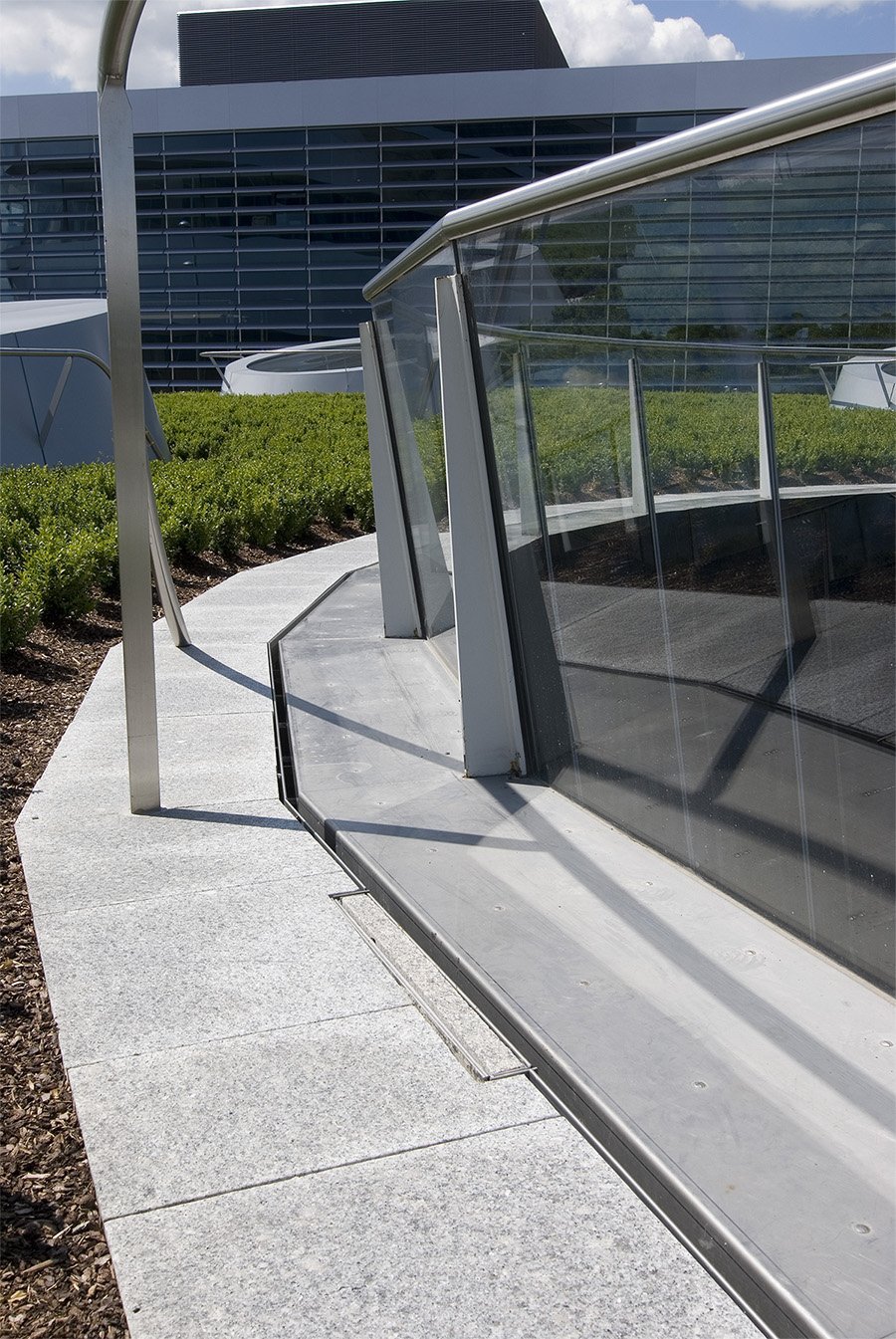
Drainage channels should incorporate discreet or aesthetic features to complement the contemporary design style of modern terminals and associated outdoor spaces.

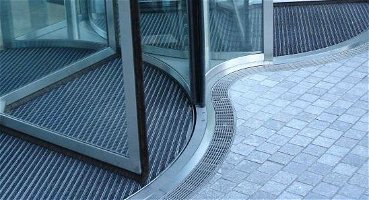
Drainage entrance area Frankfurt Airport
Bespoke solutions

Airport terminal design often requires customised channels to tie in with innovative and unique features.

Airport drainage Arrivals level Frankfurt Terminal 1
Strong & durable

Designed with longevity in mind, airport environments require robust and durable rainwater management systems that can withstand constant use by travellers, trolleys and service vehicles.

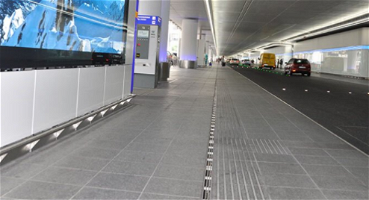
Frankfurt Airport Drainage channel arrival level Terminal 1
Barrier-free drainage design

Access to airport facilities should be safe and accessible for all users. Rainwater management solutions should support the smooth movement of trolleys, prams, mobility aids and pedestrians.

In addition, there is a growing focus on the sustainable management of rainwater on the landside. Large roof areas, forecourts and traffic areas endure significant amounts of rainfall. Where possible, this should be collected, treated, retained or allowed to infiltrate in a controlled manner. This helps to relieve the burden on sewer networks and conserve local water resources.

Requirements for rainwater management in delivery areas and safety zones

Flughafen Luftseite

As delivery areas are used not only by cars but also by heavily laden lorries, they are subject to high levels of stress:

  • Rainwater management systems must be stable and durable.

  • Safety must always be guaranteed for users.

  • Depending on the site conditions, surface water must be treated before being discharged into the sewer system.

  • Particularly in security zones, the gratings of rainwater management systems should be vandal-proof.

Solutions for complex challenges

Just as the individual areas of an airport vary, so too must the rainwater management solutions be flexible and well-developed to meet specific requirements. In addition to safe drainage, the treatment, retention and infiltration of rainwater play a key role.

Technical consultancy

Comprehensive rainwater management at airports requires consideration of the entire water cycle. This is why HAURATON’s experts provide support right from the early planning stages in developing project-specific concepts. In doing so, drainage, treatment, retention and infiltration are considered comprehensively and tailored to the project’s requirements. Our customers benefit from our many years of planning experience and project-specific consultancy.

Drainage solutions for airside and landside

With a diverse range of applications in an airport environment, flexible and versatile drainage solutions are required to meet specific challenges within individual areas.

Airside product comparison

Airside product comparison

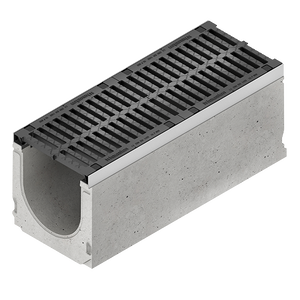
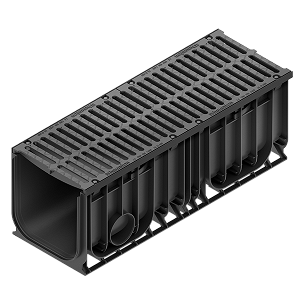
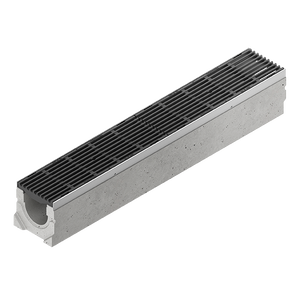
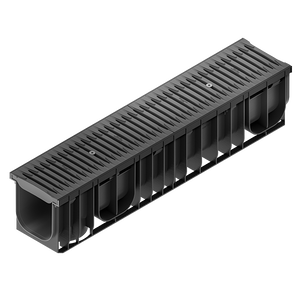
Attribute RECYFIX HICAP F RECYFIX MONOTEC ULTRA FASERFIX SUPER
Load class according to EN 1433 Load class according to EN 1433: up to F900 Load class according to EN 1433: up to F 900 Load class according to EN 1433: up to F 900
Load frequency Load frequency: 6 out of 6 Load frequency: 6 out of 6 Load frequency: 4 out of 6
Load dynamics Load dynamics: 6 out of 6 Load dynamics: 6 out of 6 Load dynamics: 4 out of 6
Nominal width | System size Nominal width | System size: 1000, 2000, 3000, 5000, 8000, 10000 Nominal width | System size: 200, 300 Nominal width | System size: 100, 150, 200, 300, 400, 500
Materials of the lower parts Materials of the lower parts: Modified polypropylene (PP), 100 % recycled composite Materials of the lower parts: Modified polypropylene (PP), up to 93 % recycled composite Materials of the lower parts: Fibre-reinforced concrete
Angle housing Angle housing:

Angle housing: Angle housing:

Galvanised steel or ductile iron edge rail with 40 x 40 mm insertion depth

Grating variants Grating variants:

Retained ductile iron slotted top

Grating variants:

Ductile iron grating with lateral concrete anchoring

Grating variants:
  • Ductile iron gratings
  • GUGI ductile iron gratings
Gradient Gradient:
  • Constant depth
  • Stepped fall
Gradient:
  • Stepped fall (at NW 200)
  • Constant depth
Gradient:
  • Constant depth
  • Built-in fall (150, 200, 300)
  • Stepped fall
Application area Application area:
  • Apron
Application area:
  • Apron
Application area:
  • Apron
Special characteristics Special characteristics:
  • Radial installations possible
  • Large channels for retention
  • Channel run without slotted top achievable, for example, under planted areas
  • Cables installations can be threaded though throat voids of the channel
Special characteristics:
  • Material combination of recycled PP and ductile iron for adaptability on the construction site and robustness
  • Side wings for optimum connection to the concrete surface
  • No screws and loose parts on the surface
  • Connection between channel and grating encased in concrete for extra safety
Special characteristics:
  • SIDE-LOCK, boltless locking system
  • 16 fixing points for grating/metre

Landside product comparison

Landside product comparison

Attribute FASERFIX SUPER RECYFIX NC DRAINFIX CLEAN BASIC FASERFIX KS RECYFIX PRO
Load class according to EN 1433 Load class according to EN 1433: up to F 900 Load class according to EN 1433: up to E 600 Load class according to EN 1433: up to F 900 Load class according to EN 1433: up to F 900 Load class according to EN 1433: up to C 250
Load frequency Load frequency: 4 out of 6 Load frequency: 3 out of 6 Load frequency: 4 out of 6 Load frequency: 3 out of 6 Load frequency: 2 out of 6
Load dynamics Load dynamics: 4 out of 6 Load dynamics: 3 out of 6 Load dynamics: 4 out of 6 Load dynamics: 3 out of 6 Load dynamics: 2 out of 6
Nominal width | System size Nominal width | System size: 100, 150, 200, 300, 400, 500 Nominal width | System size: 100, 150, 200, 300, 400 Nominal width | System size: 200, 300, 400, 500 Nominal width | System size: 100, 150, 200, 300 Nominal width | System size: 100, 150, 200, 300
Materials of the lower parts Materials of the lower parts: Fibre-reinforced concrete Materials of the lower parts: Modified polypropylene (PP), up to 93% recycled composite Materials of the lower parts: Fibre-reinforced concrete or polypropylene (PP) Materials of the lower parts: Fibre-reinforced concrete Materials of the lower parts: Polypropylene (PP), up to 93 % recycled composite
Angle housing Angle housing:

Galvanised steel or ductile iron edge rail with 40 x 40 mm insertion depth

Angle housing:

Moulded as an integral part of the channel body

Angle housing:

Depending on the version with FASERFIX or RECYFIX: Galvanised steel or ductile iron angle housing with 40 x 40 mm insertion depth

Angle housing:

Galvanised or stainless steel frame with 20 x 20 mm insertion depth

Angle housing:

Composite frame 20 x 20 mm insertion depth

Grating variants Grating variants:
  • Ductile iron gratings
  • GUGI ductile iron gratings
Grating variants:

Ductile iron

Grating variants:

Ductile iron grating

Grating variants:
  • Design gratings FIBRETEC and METROPOLIS
  • Perforated gratings
  • GUGI mesh gratings
  • Mesh gratings
  • Longitudinal bar gratings
    ⇒ Made of ductile iron, composite, galvanised or stainless steel
Grating variants:
Accessibility Accessibility: Accessibility: Accessibility: Accessibility: Accessibility:
  • Longitudinal bar grating
  • GUGI design gratings
  • Mesh gratings
  • FIBRETEC and METROPOLIS design gratings
    ⇒ Made of ductile iron, plastic, galvanised steel, stainless steel
Gradient Gradient:
  • Constant depth
  • Built-in fall (150, 200, 300)
  • Stepped fall
Gradient:
  • Constant depth
  • Stepped fall
Gradient: Gradient:
  • Constant depth
  • Built-in fall
  • Stepped fall
Gradient:
  • Constant depth
  • Stepped fall
Application area Application area:
  • Terminal access
  • Cargo area
Application area:
  • Terminals
  • Delivery areas
  • Security zones
Application area:
  • Parking spaces
Application area:
  • Forecourts
Application area:
  • Passenger areas
  • Forecourts
  • Car parks
Special characteristics Special characteristics:
  • SIDE-LOCK, boltless locking system
  • 16 fixing points for grating/metre
Special characteristics:
  • Channel and cover = one component
  • Self-centring screw –> automatically finds the correct position
  • Polypropylene channel body can be easily machined on site
Special characteristics:
  • Rainwater treatment by surface filtration
  • Tested according to the requirements of the German technical authority DIBt
  • According to the German guideline DWA-M 179-1 the retention efficiency of suspended solids smaller than 63 µm (TSS63) is as high as 95% due to the filter velocity of < 2,5 m/h
Special characteristics:
  • SIDE-LOCK, boltless locking system
  • Optional bar and bolt fixing per grating
Special characteristics:
  • Pre-assembled ready for installation
  • Low weight, easy to handle and install
  • Channel body can be easily machined, cut to size on-site

Other application areas that may interest you

Contact us

Do you need support from our drainage experts? Contact us! We’re happy to help.

This field is for validation purposes and should be left unchanged.
Your Name*

Optional information that helps us give you better advice:

How can we help you?

Drop files here or
Max. file size: 256 MB.

    Questions?

    Our experienced planning team will be happy to help you.

    Get in touch
    Questions?