Challenges for rainwater infiltration
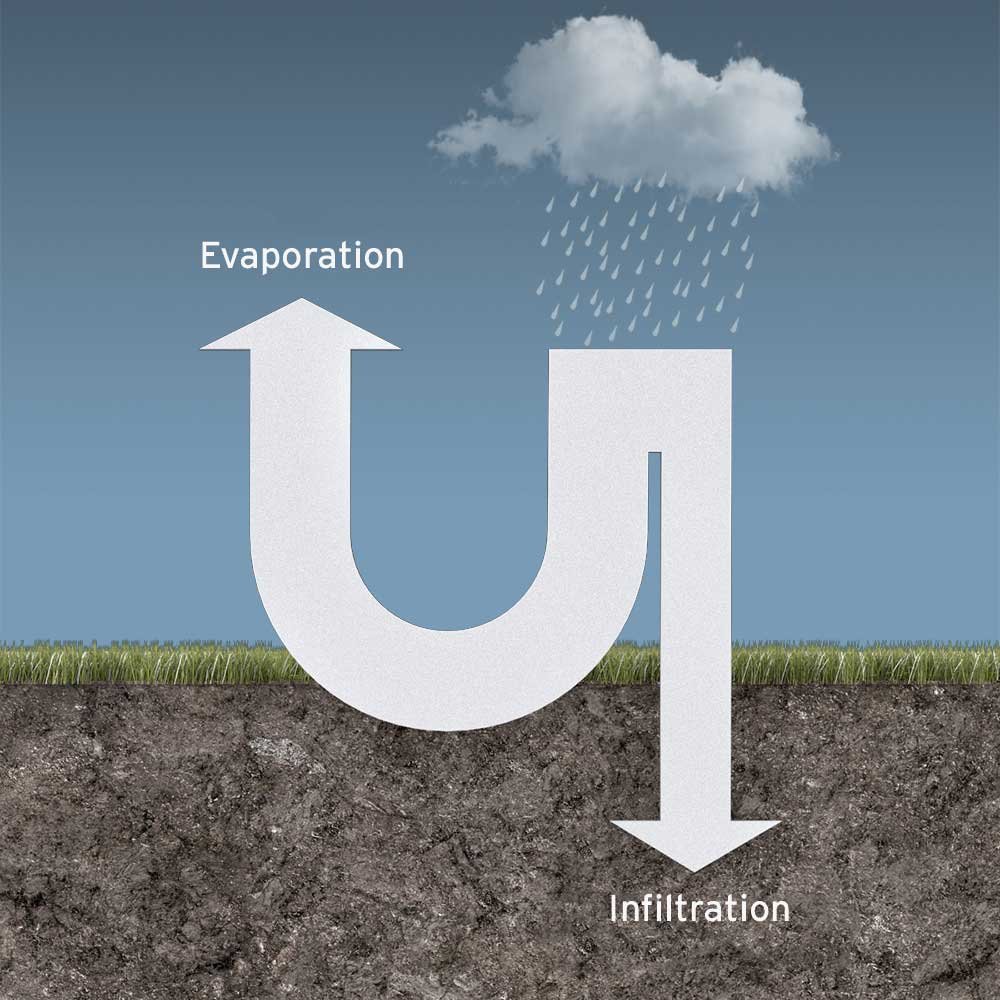
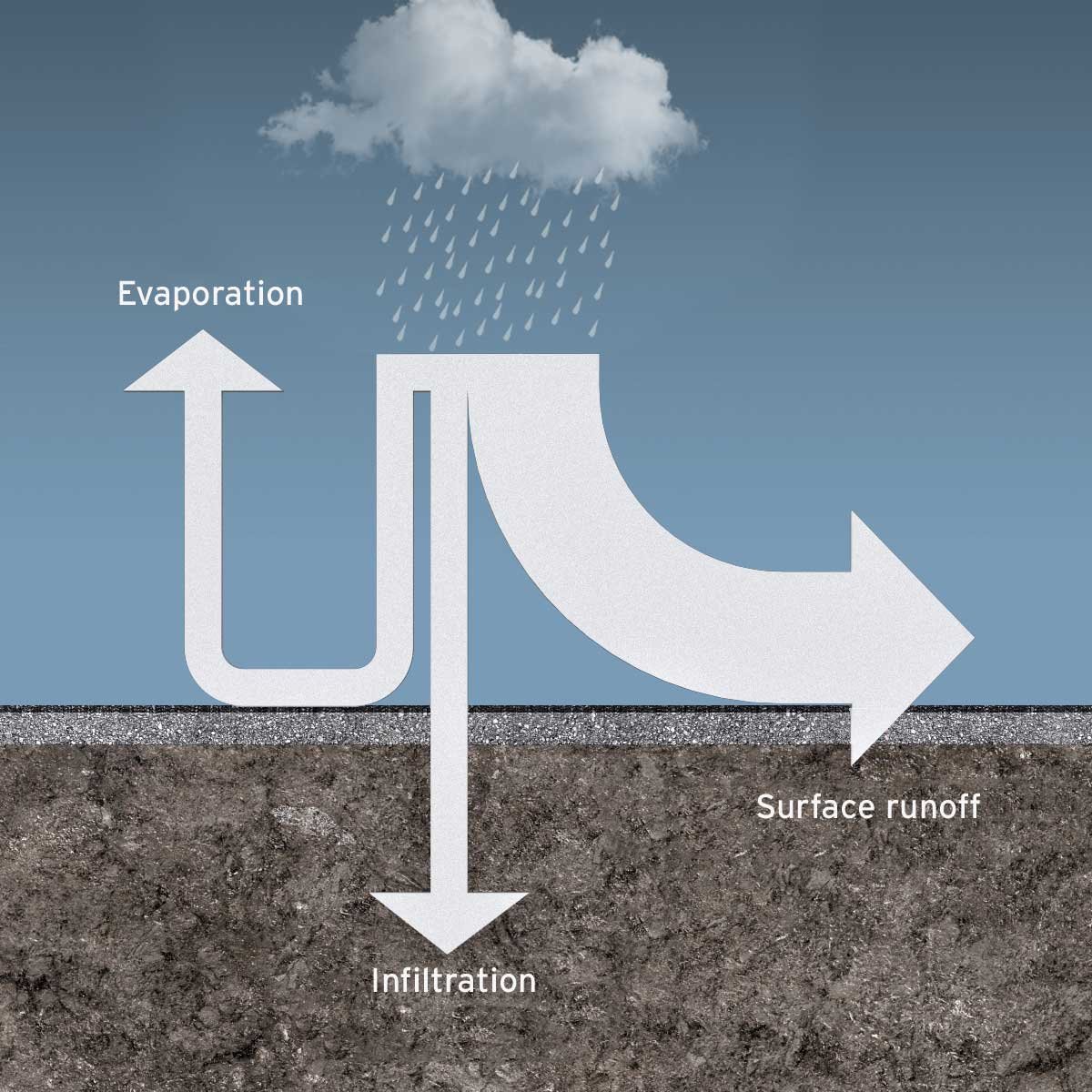
One of the biggest challenges for effective rainwater infiltration is the high level of urban development. As more residential and commercial areas are sealed with concrete, tarmac, and other impermeable surfaces, natural infiltration into the ground becomes increasingly difficult.
Without proper on-site solutions, rainfall is forced into the sewer system, contributing to localised flooding, sewer overflows, and increased pressure on water infrastructure. This also prevents vital groundwater recharge, reducing long-term water sustainability.
By incorporating sustainable drainage systems (SuDS) and decentralised rainwater management solutions, it is possible to counteract these problems. On-site infiltration not only relieves the burden on sewer networks but also helps to manage surface water more effectively, protect local watercourses, and maintain a healthy natural water cycle.
- Impact of Land Sealing
Urbanisation and widespread use of hard surfaces like concrete, asphalt, and tarmac reduce the soil’s ability to naturally absorb rainwater. This problem is worsened during Summer when urban heat islands develop, leading to higher flood risks and reduced groundwater recharge.
- Withstanding Heavy Loads
Infiltration systems installed in public spaces, commercial areas, or industrial sites must be designed to handle constant heavy traffic and high load-bearing requirements.
- Rising Rainfall Runoff Volumes
Heavy rainfall events overload the sewers and drainage systems.
- Pollutants in Stormwater Runoff
Before infiltration, rainwater often needs treatment to prevent contaminants from entering groundwater. Substances such as oil, petrol, tyre wear, and road debris can be effectively filtered using surface water treatment channels or filter systems.
- Soil Suitability and Infiltration Capacity
The efficiency of infiltration depends on soil permeability. The Kf value determines how well water can infiltrate through soil layers. A soil analysis by an expert is recommended to assess infiltration capacity before installing a system.
Requirements for Rainwater Infiltration Systems
The performance requirements for infiltration systems vary depending on where they are installed. Whether in residential gardens, commercial developments, or heavily trafficked industrial yards. In the UK, where sustainable drainage systems (SuDS) are essential for flood prevention and water management, infiltration elements provide a reliable, space-saving and cost-effective solution for long-term rainwater control.
- Safety and Reliability
Infiltration systems must remain safe and fully operational even under heavy rainfall or high-traffic conditions. Long-term durability and consistent performance are key to ensuring effective stormwater management.
- Minimal Land Use
With land sealing and limited space becoming increasingly common in UK cities, infiltration systems should require as little surface area as possible. Compact solutions that maximise efficiency while minimising land consumption are vital for urban developments.
- High Rainwater Storage Capacity
To cope with intense and unpredictable UK rainfall, infiltration systems must be able to store and gradually release large volumes of water. This prevents local flooding and reduces pressure on public sewer networks.
- Adaptable Load Capacity
Different applications, from domestic to industrial yards, demand systems that can be tailored to suit their load-bearing requirements. Choosing an infiltration system designed for specific site conditions ensures long-term resilience.
- Flexible Installation Options
Modern infiltration systems should offer easy and versatile installation, with connection points in both longitudinal and transverse directions. This flexibility simplifies construction and allows for quick, cost-efficient setup.
Infiltration and Attentuation Crate Solutions
The DRAINFIX BLOC HD infiltration crate system is a high-performance sustainable drainage solution (SuDS). Lined with a geotextile, this system allows stormwater and rainwater to be efficiently retained and gradually infiltrated back into the ground. This helps to prevent surface water flooding, reduce pressure on existing drainage networks and promote natural groundwater recharge.
Combination with Rainwater Treatment Systems
Rainwater is first collected through a channel drainage system then filtered using a substrate channel, such as the DRAINFIX CLEAN system, which provides effective removal of pollutants includin heavy metals, hydrocarbons and fine sediments. This ensures that only clean water enters the infiltration or attenuation system, protecting soil quality and enhancing long-term sustainability. By integrating treatment channels with the DRAINFIX BLOC HD attentuation crate system, HAURATON delivers a complete rainwater management solution.
Swales are shallow, vegetated channels that naturally slow down surface water runoff and encourage infiltration into the soil. As water filters through the vegetation and soil layers, pollutants are captured and bound within the substrate, helping to improve water quality. When combined with HAURATON DRAINFIX BLOC HD crates and channel drainage, swales form part of a holistic approach to rainwater management.
The HAURATON Product Finder
Application areas for rainwater infiltration
You are on this page
Infiltration of rainwater into the subsoil